- Rondezvous
- Posts
- How Paris Transformed Itself. We Can Too.
How Paris Transformed Itself. We Can Too.
We can have nice things!

Ron Davis
March 27, 2026
As a Seattle resident, I’m tired of the lack of ambition of our political leadership. While our private sector is among the most ambitious in the world, our political class is cowed by its obsession with process, insiderism, and the donor veto.
So our private sector runs roughshod over our politics, and we do not tax the rich, nor do we build the kind of affordable quality of life we all deserve.
Paris is a great example of political ambition. Anne Hidalgo is just finishing up her time as Mayor. This socialist leader took office in 2014 with a vision to clean up a dirty city, make it a haven for people on foot or on a bike, and start greening its too-concrete-filled landscape.
It has been a wild success. Tens of thousands of parking spots and many miles of car lanes have been repurposed as parks, protected biking lanes, promenades and pedestrian paths. A wildly ambitious expansion of the Paris metro is also underway - and it is being built much faster and at a fraction of the cost of Sound Transit.
And it has transformed the city.
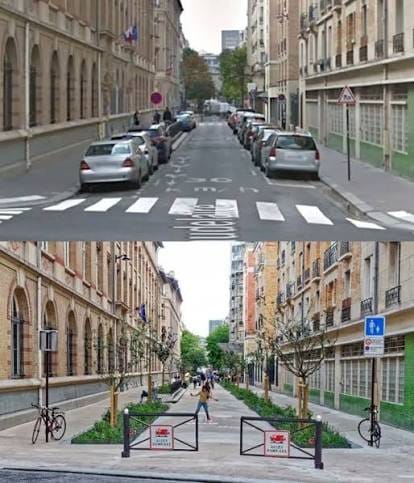
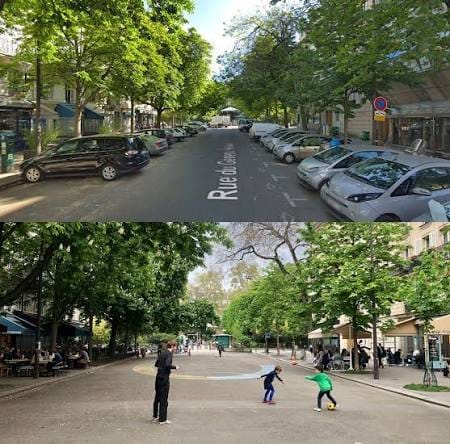
Perhaps most stunning—look what it has done to the air quality. Infill housing is famously great for carbon emissions. But if it is managed correctly, local air quality can be pretty excellent too.
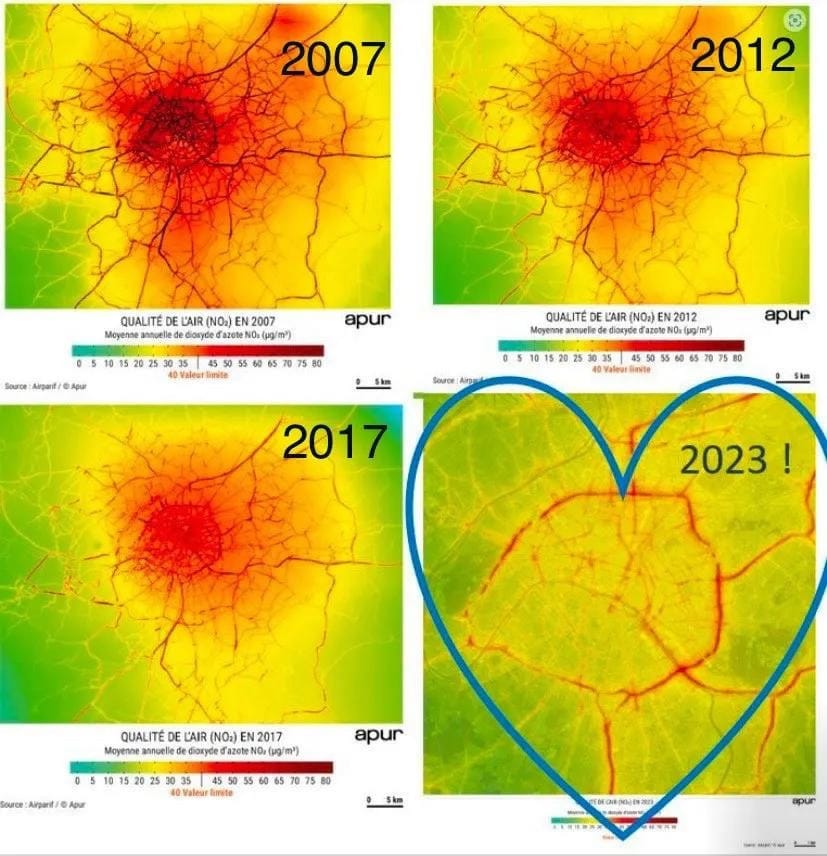
Keep in mind this city is more than 5x as dense as Seattle! Simply making alternates to cars more feasible and convenient transformed the very air they breathe.
Unsurprisingly, the socialist party that has ushered in these changes just decisively won another mayoral term.
We can transform our community too. We have the resources (we are actually even richer)—but we currently lack the courage.
And please don’t tell me it can’t be done in a modern city, “built for cars.”
Much of our city was built before cars—Wallingford was a streetcar suburb! And anyway, even more modern style cities like Seoul (yes, an old city, but with a modern form) are transforming themselves too. Check out this freeway to stream + park conversion in Seoul, South Korea.
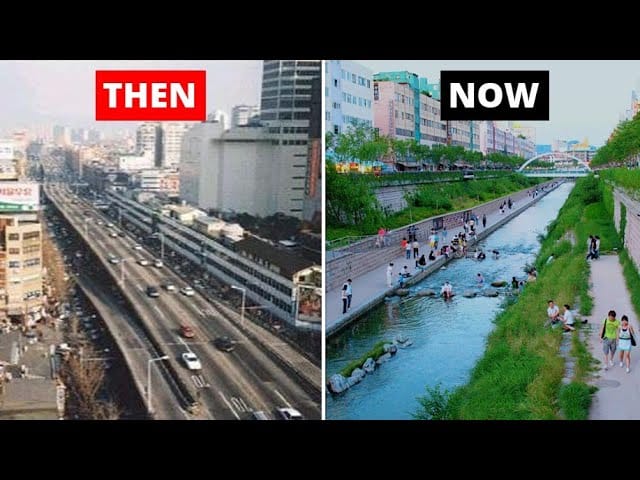
By the way, after they took out all those lanes, traffic got better!
As you can imagine, my frustration with our lack of progress is part of what motivates me to run for office.
I’m tired of weak-willed politicians who think thirty year time horizons for small accomplishments are good enough. I’m tired of people who are so stuck in trading small favors for gains that they have lost any imagination for what a real, better future could look like. And I’m sick, sick, sick of people who think that process is justice, rather than a potential means (or block) to justice.
By the way, this future isn’t just quieter, safer, healthier, and more fun. It’s far more affordable!
Transportation is one of the top items in household budgets, often the second highest expense. Car ownership (depreciation, repairs, insurance, fees, gas) costs $10k to $15k a year in Seattle. Transit-only is about $100-$120 a month, and much lower for low-income “Orca Lift” cardholders. Even with $1000 set aside for a few uber rides a month, that’s less than $2500 a year for a middle class rider.
Interestingly, even a modest paring back on driving produces lots of savings. A new study suggests that in Washington State, driving 20% less results in $1800 saved per household statewide, meaning the saving is likely higher in Seattle. It would also save 170 people from car crash deaths per year, plus 1419 more lives saved from reduced emissions and improved fitness per year.
We can have an affordable city. But it means making it much, much easier to build. It means taxing the rich to fund the construction of the future. It means building up our building trades so we can actually deliver. And it means making the hard choices any city must make if it wants to make it as easy to get around without a car as it is with.
Please consider supporting my campaign.